

Importance of Services Sector and Profile of Trade in Services
1). The Importance of the Service Sector in Namibia
Services sectors and the trade thereof are very important sectors for Namibia, as they are the fastest growing components of Gross Domestic Product (GDP) and foreign direct investment (FDI). Services form part of almost every activity in an economy. This is particularly true of what are often referred to as producer services such as transport, communications, finance, distribution and business services. According to the Namibia Statistics Agency (NSA), the services sector currently employs 62% of the workforce and contributes over 50% of the GDP hence critical in economic diversification, employment creation, and growth, of the country. Hospitality, wholesale and retail commerce, transportation, financial services, telecommunications, and tourism comprise notable sectors of the services sector.
Key Services Sectors:
1. Financial and Banking: The financial services sector, particularly insurance and banking (fuelled by increases in both insurance premiums and banking activities) has experienced significant growth, which has facilitated investments and economic stability. This sector is essential for the support of small enterprises and the promotion of entrepreneurship, both of which are essential to the broader economy.
2. Tourism as a Priority Sector: Namibia's natural attractions establish it as a prominent player in the global tourism industry. Despite the significant impact of the COVID-19 pandemic, tourism continues to be a significant source of income, contributing approximately 10% to the GDP. Ongoing recovery efforts are designed to restore the sector's substantial economic contribution.
3. Restrictions in the Transport Sector: The transport sector has encountered challenges, particularly as a result of the liquidation of Air Namibia, which has resulted in a reduction in regional flights. This underscores the necessity of a more robust transportation infrastructure, despite its critical role in logistics.
4. Telecommunications Expansion: The provision of extensive broadband services by MTC, Telecom Namibia and Paratus Namibia has significantly enhanced telecommunications, thereby promoting social and economic inclusivity throughout Namibia.
5. In 2024, the retail and wholesale sectors also experienced recovery growth, which aided in the preservation of economic stability in the face of global economic challenges
Namibia’s National Trade Policy (2023-2030) highlights the importance of trade in services, including digital trade as the most dynamic part of global trade and an essential input into the production of goods and services, an avenue for export diversification, and a significant contributor to inclusive growth, job creation and poverty alleviation.
2. Trade in Services Dynamics
a. Services Trade Balance and Structure
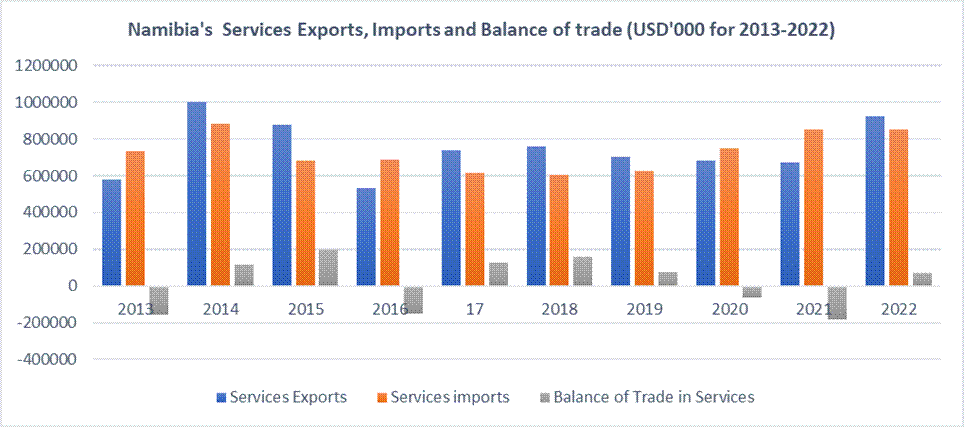
Namibia's service imports and exports generally move in sync, showing signs of growth or decline at the same time. Generally, Namibia is a net exporter of services. Over the past decade (2013-2022) exports of services were largely higher than its imports of services except for 2013, 2016, 2020 and 2022.
Namibia's exports of services are concentrated in travel and transport services, which increased strongly in 2022 along with the recovery of tourism as pandemic-related restrictions were lifted. Exports of manufacturing services were significant, which are mainly for services rendered in converting copper ore into blister copper.
Imports of services are concentrated in transport services, maintenance and repair services, and telecommunications, computer and information services, which have grown strongly in recent years
|
|
Table 3. Namibia’s Balance of Trade in Services (USD000 for 2013-2022) |
||||||||||
|
Code |
Service label |
2013 |
2014 |
2015 |
2016 |
017 |
2018 |
2019 |
2020 |
2021 |
2022 |
|
S |
All services |
-153485 |
117789 |
197148 |
-152999 |
124663 |
158224 |
75338 |
-62761 |
-180291 |
71800 |
|
4 |
Travel |
203431 |
402803 |
402259 |
151328 |
251305 |
323163 |
242039 |
46140 |
69969 |
183059 |
|
1 |
Toll Manufacturing services |
|
|
111946 |
102224 |
132882 |
136896 |
120096 |
128604 |
100511 |
98562 |
|
3 |
Transport |
-18744 |
-79377 |
-76372 |
-63856 |
-19615 |
-34285 |
-26712 |
47606 |
23491 |
77987 |
|
SOX |
Commercial services |
-134867 |
19608 |
159760 |
-131910 |
126342 |
174127 |
91404 |
-74501 |
-174537 |
64218 |
|
12 |
Government goods and services n.i.e. |
-18618 |
98180 |
37388 |
-21088 |
-1680 |
-15903 |
-16066 |
11740 |
-5754 |
7583 |
|
7 |
Financial services |
19307 |
23172 |
18137 |
23117 |
18519 |
22455 |
20091 |
12967 |
5794 |
4869 |
|
11 |
Cultural, and recreational services |
526 |
1387 |
1535 |
2101 |
3626 |
4592 |
1419 |
-22969 |
6642 |
3435 |
|
5 |
Construction |
-44565 |
-85653 |
-22855 |
-72578 |
-60591 |
-57657 |
-9534 |
11375 |
15464 |
2198 |
|
8 |
Intellectual property services |
-6267 |
-5824 |
-6736 |
-2673 |
-2092 |
105 |
-1953 |
-3243 |
-3060 |
-7145 |
|
6 |
Insurance and pension services |
-20139 |
-22135 |
-20599 |
-15269 |
|
|
-26643 |
|
-10715 |
-17816 |
|
9 |
Telecoms computer, and info services |
-43755 |
-36895 |
-57412 |
-32155 |
-9711 |
-31873 |
-24672 |
-30203 |
-76906 |
-67826 |
|
10 |
Other business services |
-271209 |
-292769 |
-205808 |
-220503 |
-176063 |
-159191 |
-207324 |
-159859 |
-167452 |
-76638 |
|
2 |
Maintenance and repair services n.i.e. |
|
8639 |
15664 |
-3646 |
4738 |
-4102 |
4596 |
-93499 |
-138272 |
-136468 |
b) Namibia’s Exports of Services (USD’000 for 2013-2022)
|
Table 1. Namibia’s Exports of Services (USD’000 for 2013-2022) |
||||||||||||
|
Code |
Service label |
2013 |
2014 |
2015 |
2016 |
017 |
2018 |
2019 |
2020 |
2021 |
2022 |
% growth, 2013-22 |
|
S |
All services |
580525 |
999614 |
877886 |
535423 |
740155 |
761939 |
702138 |
684355 |
674116 |
925362 |
59% |
|
SOX |
Commercial services |
527895 |
824798 |
785455 |
487181 |
696507 |
731428 |
671264 |
620126 |
624254 |
880127 |
67% |
|
4 |
Travel |
244088 |
452393 |
465058 |
223561 |
341068 |
379569 |
348583 |
118068 |
128498 |
276798 |
13% |
|
3 |
Transport |
138832 |
110717 |
83298 |
80011 |
115737 |
116242 |
108820 |
149583 |
154294 |
231519 |
67% |
|
10 |
Other business services |
13819 |
30813 |
27799 |
14305 |
7158 |
5476 |
4760 |
140917 |
141871 |
178989 |
1195% |
|
1 |
Toll Manufacturing services |
|
|
112189 |
102589 |
133330 |
137279 |
120514 |
129052 |
100996 |
99020 |
|
|
12 |
Government goods and services |
52630 |
174815 |
92431 |
48243 |
43647 |
30511 |
30874 |
64229 |
49862 |
45236 |
-14% |
|
2 |
Maintenance and repair services |
|
52700 |
34080 |
16934 |
26121 |
30244 |
34321 |
34629 |
37663 |
42042 |
|
|
9 |
Telecoms, computer, info services |
12842 |
25686 |
22229 |
15921 |
37323 |
17891 |
14382 |
13142 |
23374 |
23233 |
81% |
|
5 |
Construction |
19546 |
16036 |
14326 |
6019 |
4185 |
9101 |
9154 |
13076 |
16081 |
15152 |
-22% |
|
7 |
Financial services |
22589 |
24355 |
24331 |
24906 |
27268 |
29407 |
23899 |
17000 |
6719 |
6119 |
-73% |
|
11 |
Cultural, and recreational services |
870 |
2277 |
1793 |
2470 |
4002 |
4828 |
1766 |
2183 |
8288 |
4708 |
441% |
|
8 |
Charges for the use IPR property. |
677 |
2800 |
345 |
312 |
315 |
1390 |
588 |
2475 |
2294 |
1718 |
154% |
|
6 |
Insurance and pension services |
761 |
760 |
6 |
153 |
|
|
4476 |
|
4178 |
827 |
9% |
Source ITC Trademap. Accesses on 24 October 2024
c) Namibia’s Imports of Services (USD’000 for 2013-2022)
|
Table 2. Namibia’s Imports of Services (USD’000 for 2013-2022) |
||||||||||||
|
Code |
Service label |
2013 |
2014 |
2015 |
2016 |
017 |
2018 |
2019 |
2020 |
2021 |
2022 |
% Growth 2013-22 |
|
S |
All services |
734010 |
881825 |
680738 |
688422 |
615492 |
603715 |
626800 |
747116 |
854407 |
853562 |
16% |
|
SOX |
Memo item: Commercial services |
662762 |
805190 |
625695 |
619091 |
570165 |
557301 |
579860 |
694627 |
798791 |
815909 |
23% |
|
10 |
Other business services |
285028 |
323582 |
233607 |
234808 |
183221 |
164667 |
212084 |
300776 |
309323 |
255627 |
-10% |
|
2 |
Maintenance and repair services n.i.e. |
|
44061 |
18416 |
20580 |
21383 |
34346 |
29725 |
128128 |
175935 |
178510 |
#DIV/0! |
|
3 |
Transport |
157576 |
190094 |
159670 |
143867 |
135352 |
150527 |
135532 |
101977 |
130803 |
153532 |
-3% |
|
4 |
Travel |
40657 |
49590 |
62799 |
72233 |
89763 |
56406 |
106544 |
71928 |
58529 |
93739 |
131% |
|
9 |
Telecommunications, computer, and information services |
56597 |
62581 |
79641 |
48076 |
47034 |
49764 |
39054 |
43345 |
100280 |
91059 |
61% |
|
12 |
Government goods and services n.i.e. |
71248 |
76635 |
55043 |
69331 |
45327 |
46414 |
46940 |
52489 |
55616 |
37653 |
-47% |
|
6 |
Insurance and pension services |
20900 |
22895 |
20605 |
15422 |
|
|
31119 |
|
14893 |
18643 |
-11% |
|
5 |
Construction |
64111 |
101689 |
37181 |
78597 |
64776 |
66758 |
18688 |
1701 |
617 |
12954 |
-80% |
|
8 |
Charges for the use of intellectual property n.i.e. |
6944 |
8624 |
7081 |
2985 |
2407 |
1285 |
2541 |
5718 |
5354 |
8863 |
28% |
|
11 |
Personal, cultural, and recreational services |
344 |
890 |
258 |
369 |
376 |
236 |
347 |
25152 |
1646 |
1273 |
270% |
|
7 |
Financial services |
3282 |
1183 |
6194 |
1789 |
8749 |
6952 |
3808 |
4033 |
925 |
1250 |
-62% |
|
1 |
Manufacturing services on physical inputs owned by others |
|
|
243 |
365 |
448 |
383 |
418 |
448 |
485 |
458 |
#DIV/0! |
Source ITC Trademap. Accesses on 23 October 2024
Namibia's Trade in Services Commitments under the World Trade Organisation (WTO)
Namibia has been a member of the WTO since 01 January 1995 and accepted the General Agreement on Trade in Services (GATS) upon its entry into force in 1995. Namibia has liberalised two service sectors under the GATS, which are Business Services (only services related to scientific and technical consulting services such as offshore oil and gas exploration) and Tourism (Hotels and Restaurants and Travel Agencies and Tour Operators Services). The tourism sector has been fully liberalised in all four modes of supply (cross-border supply, consumption abroad, commercial presence and presence of natural persons). These commitments were made beyond the current Government’s control although they can’t be revised at this juncture (These commitments were made before the current government took office and are not currently subject to revision.?)
Namibia Schedule of Specific Commitments in trade in services under the WTO General Agreement on Trade in Services can be found here
Namibia's Trade in Services Commitments under the AfCFTA
-
The AfCFTA Protocol on Trade in Services (Protocol) establishes the rules for liberalising trade in services between State Parties Trade in Services - AfCFTA. The Protocol aims to boost intra-African trade in services based on the four modes of supply:
-
cross-border supply,
-
consumption abroad
-
commercial presence, and
-
temporary movement of natural persons.
-
-
The Protocol entered into force on 30 May 2019. The Protocol liberalises services trade through market access commitments under Schedules of Specific Commitments, and regulatory frameworks for each sector.
-
The Protocol on Trade in Services outlines the mandate for the negotiations at the AfCFTA.
-
The first phase of the services negotiations is still ongoing and covers five priority services sectors: (i) business; (ii) communication; (iii) financial; (iv) tourism; and (v) transport.
-
Currently, 48 initial and revised offers from both State and non-State Parties are being considered and the request/offer process is at a fairly advanced stage.
-
Namibia is negotiating trade in services commitments under AfCFTA independently (not as part SACU).
-
Namibia submitted its trade in services schedules, which were adopted by the African Union Authority in February 2023.
-
Namibia's final revised trade in services offer under the AfCFTA can be found here
-
For each country, the schedules of specific commitments outline the terms and conditions on market access, conditions to qualify for national treatment, undertaking additional commitments, and timeframes for implementation of such commitments in each service sector.
Namibia's Trade in Services Commitments under SADC
-
Namibia is part of the SADC Protocol on Trade in Services which entered into force on 13 January 2022, having been ratified by 11 out of the 16 members.
-
Under this protocol, members made sector-specific commitments and schedules using a positive list approach in four services sectors (communication, financial, tourism, and transport services).
-
The schedules of specific commitments differ across SADC members states.
-
Trade in Services List of Commitments by Namibia can be found here
-
Horizontal commitments apply to, inter alia, measures affecting the entry and temporary stay of certain categories of natural persons and/or requirements related to the establishment of foreign-owned or joint venture companies.
-
Subsectors where Namibia has made specific commitments within SADC Protocol on Trade in Services Priority Sectors are communication, financial, tourism, and transport service.
|
|
SADC Priority Services Sectors |
Specific commitments |
No specific commitments |
|
1 |
Communication services |
|
No |
|
|
Courier services |
|
No |
|
|
Telecommunication services |
Yes |
|
|
|
Audiovisual services |
|
No |
|
2 |
Financial services |
|
No |
|
|
Insurance and insurance-related services |
Yes |
|
|
|
Banking and other financial services |
Yes |
|
|
3 |
Tourism and related services |
|
No |
|
|
Hotels and restaurants (including catering) |
Yes |
|
|
|
Travel agencies and tour operators' services |
Yes |
|
|
|
Tourist guide services |
|
No |
|
4 |
Transport services |
|
No |
|
|
Air transport services |
Yes |
|
|
|
Space transport |
|
No |
|
|
Rail transport services |
|
No |
|
|
Road transport services |
Yes |
|
|
|
Pipeline transport |
|
No |
|
|
Services auxiliary to all modes of transport |
Yes |
|
Note: This table indicates which service subsectors have specific commitments, and which do not. It does not cover the level of commitments taken (i.e. the extent of limitations on market access and national treatment).